Renting from a community landlord such as the council is usually the cheapest way to rent. You will be responsible for paying council tax and the bills, but you will not need to pay a deposit. However, there are very few places available and the council will usually have a long waiting list.
If you decide to apply to the council, you will need to get an application form from their housing department.
Renting privately is usually more expensive than council places but there are usually lots of places to choose from. Again, you will be responsible for paying the bills and council tax. You will also need to pay a deposit and rent in advance.
Housing associations are usually cheaper than renting privately but more expensive than council housing. You will be responsible for paying the bills and council tax, but you will not have to pay a deposit.
Like council housing, there are few places available and most properties go to people on the council’s waiting list. Sometimes a housing association may accept a direct application.
If you want to apply to a housing association, go to their offices and find out if you can make an application directly.
Take a look at our Accommodation options chart to work out what housing options are available.
I have found a place that I want to rent, what do I do next?
When you have found a place that you like, go and look at it properly before signing any occupation contract. If you can, take someone you trust with you.
Print off and use our Viewing a Property checklist to help you think about what you should ask and look out for.
- Work out how much it will cost
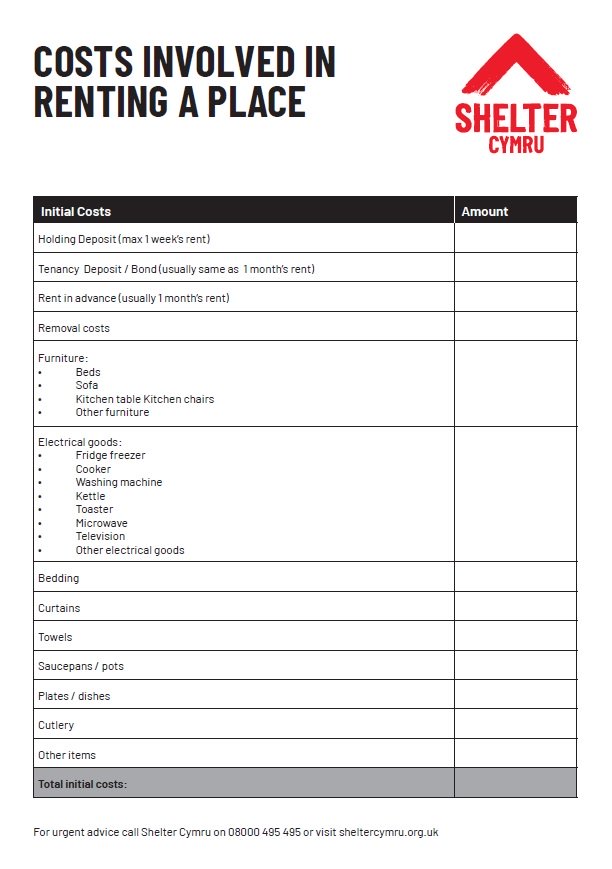
We have put together a list of things you might need to pay for.
Make sure you ask the landlord or agent to tell you about all the costs involved in renting the place, such as rent, bills, council tax and any deposit.
- Decide if you can afford it
Once you have worked out how much the place is going to cost, use this free Money Advice Service budget planner to work out if you can afford it.
See if there is any help you can get to pay the bills or help you set up home.
- Make sure the place is safe
Ask to check the electrical safety report, gas certificate and any smoke alarms and carbon monoxide alarms. Check there are no repairs needed on the property.
Check out the local area – would you feel safe coming home at night?
- Check the landlord is registered
Your landlord has to be registered by law. Check they are on the register here.
Avoid visiting properties or meeting landlords alone. Check out our Top Tips for Staying Safe