When Misty was fifteen, she was placed in a woman’s refuge temporary accommodation placement with her mother. This placement was a considerable distance from Misty’s school, which meant she had to take public transport to get there. This was a struggle for Misty, and as a result of this and the impact of temporary accommodation, her attendance fell below 40%.
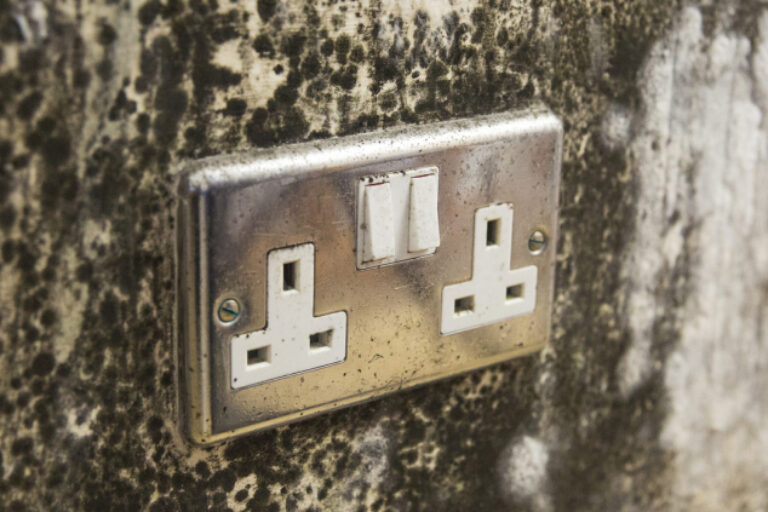
Misty’s first temporary accommodation placement was unsafe. The placement was specifically for women and families but it was a really dangerous environment for children. At the top of a flight of stairs, there was a banister with several slats missing and a large gap that a baby or young child could have fallen through. The wiring was also in a dangerous condition,
“There was faulty wiring, and according to an electrician, a young child could have been electrocuted to death”
As well as unsafe disrepair, the temporary accommodation placement was unclean,
“Everything was filthy. There was mould everywhere; in the fridge and freezer. I don’t know how you can have mould in a freezer, but there was. And there were bugs in the cupboards”
Misty witnessed a lot of fighting in the placement and said that she was attacked at age fifteen. Misty told us that children in the placement were exposed to violence, adult mental health issues and a resident that dealt drugs,
There were also issues around space and sharing facilities in Misty’s temporary accommodation. Seven families had to share three bathrooms which was not enough. Having to share most of the house with other families meant there was a lack of privacy,
“The only private area was the bathroom if you were in it and the bedroom which you had to share with your family. I was lucky to be just with my mum, but no teenager wants to share a room with their parent”.
Misty told us about families with mixed-gender teenage children having to share bedrooms, how one teenager had to share with a stranger and how the bunkbeds were not suitable for older children.
Living in temporary accommodation also had a significant impact on Misty’s health. Before living in temporary accommodation, Misty was very athletic and danced six days per week. However, due to the living conditions in temporary accommodation, Misty developed asthma. She also developed a neurological disorder that can be triggered and worsened by trauma and stress. Misty attributes the stress she experienced in temporary accommodation as a significant contributing factor to the onset of her neurological disorder,
“It was the most stressed I’ve been in my whole life … I have a lot of health issues. I’ve seen more than most 21-year-olds should have seen and it has been an uphill battle”
As well as experiencing a deterioration in health, Misty also experienced issues around getting mail whilst living in temporary accommodation which meant she often wasn’t notified about health or other appointments.
Misty made it very clear that she would never like to relive her time in temporary accommodation due to the lifechanging impact it had on her. She said,
“If I had to do it all over again, I was young enough to have sofa surfing as an option and had a decent network of friends … I would have preferred to sleep on a bunch of sofas than to deal with the institutionalised group homes I was in. The things you see … It is not an ideal situation to be in. I would have much preferred to stay with my friends. I would have preferred not to retraumatize myself every day to the point where it sends signals to my brain”
When asked what she wanted others to know about her time in temporary accommodation, Misty spoke passionately about how young people are not able to process the trauma and chaos they are exposed to in temporary accommodation,
“For kids, being homeless is more than being homeless. It’s insecurities and vulnerabilities
…Their minds aren’t developed enough to comprehend this kind of stuff”
After living in the temporary accommodation placement with her mother, Misty was later placed in another temporary accommodation placement as a sixteen-year-old care leaver.
Unsafe temporary accommodation is, unfortunately a common occurrence. And although the last Welsh Government had promised to change the law to ban the use of temporary accommodation that was deemed particularly dangerous they ultimately failed to do so.